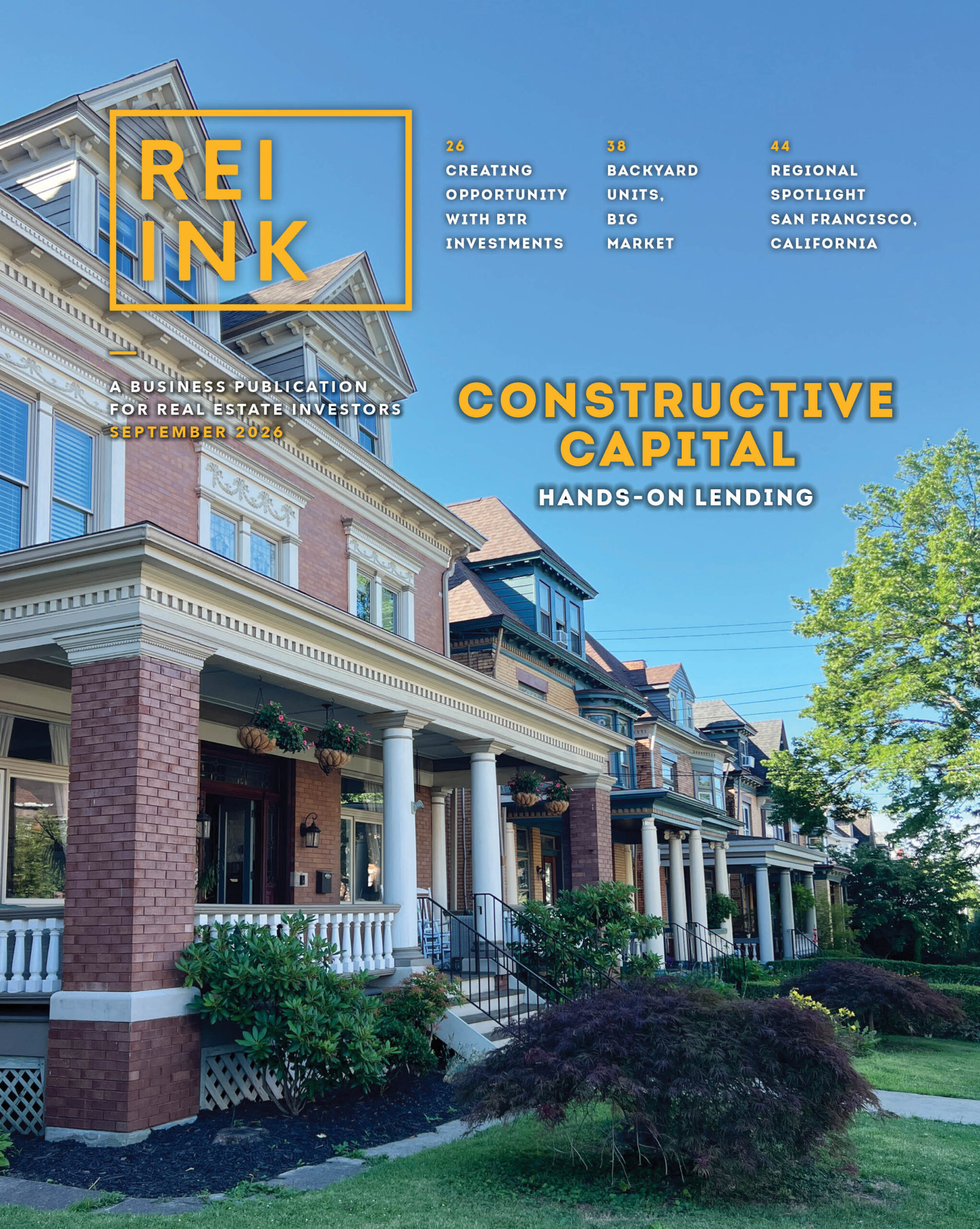

Student Housing Remains “Head of Class,” but with Caveats
by Carole VanSickle Ellis
In January of this year, Multifamily Housing News (MHN) reported student housing remained “head of class” for 2026 thanks to Yardi sourced data indicating estimated occupancy for the 2025 2026 (the most recent data available) academic year exceeding 95% “after several years of testing marked by economic volatility, shifting renter sentiment, and constrained capital.”
Kevin Larimer, senior managing director with Berkadia, a commercial real estate company formed as a joint venture between Berkshire Hathaway and Jeffries Financial Group, said at the time, “We remain very bullish about the sector.” Larimer did note his group “recognized the need to focus on specific markets and specific locations within submarkets.”
Typically, the most reliable student housing markets are centralized around top tier and flagship universities in walkable locations and, ideally in markets with some degree of supply constraint. For example, as of January 2026, the top three markets for student housing based on Yardi Matrix preleasing data were Virginia Tech’s Blacksburg, Virginia (88.2% preleased), The University of Missouri’s Columbia, Missouri (84.1% preleased), and the University of Wisconsin’s Madison, Wisconsin (83.5% preleased).
Investors should note that although preleasing trends continue with strong performances, Yardi found roughly half of all student housing markets were showing declining rents. Average losses hovered around 4.6%, while average posting volumes rose 3.7%. This could indicate some softening in the market due to growing supply of student housing.
Ben Mohns, a partner and head of global asset management at Harrison Street Asset Management, observed, “Rent growth has normalized over the course of the 2025-2026 preleasing season, [while] the school year started with mid 90s occupancy nationally.” This could be a good sign for investors looking at student housing assets as predictable, long- term investments, but may come as a disappointment for those hoping to take advantage of the recently burgeoning post-covid market.
Leaning on the “Why Factor”
Student housing appeal is driven largely by what the industry refers to as the “why factor,” nomenclature designating a combination of experiential elements and design decisions. For example, communities offering “wellness focused” design elements, outdoor spaces, and purpose-built study areas far outperform more traditional multifamily living designs in the student housing space. In response to this, Landmark Properties now designs communities with year-round access to outdoor areas and outdoor fitness facilities complete with heated patio pavers to maintain comfortable temperatures during colder months. Other developers have partnered with pool and spa services to allow residents to access trendy and often exclusive wellness experiences.

The demand for new and exclusive living experiences in student housing is creating a new tier in the student housing space. Luxury student housing is growing in presence and appeal, thanks in large part to young adults’ tendency to prioritize trends in digital innovation, wellness, and consumer spending. According to Belgium-based market research and innovation agency Haystack Consulting, younger adults, particularly junior Millennials and Gen Z, exert “a strong influence” in these areas. That is, of course, particularly true when it comes to a market segment dominated by young adult preferences.
Luxury student housing is typified (but by no means delineated or defined) by fully furnished units that include trendy décor, high end finishes, access to exclusive or private gyms, swimming pools, study lounges, and outdoor areas, and 24/7 concierge services.

Most of these buildings also offer enhanced security and on-site staff. Fans of this type of housing argue that safety and security combine with comfort and convenience to optimize academic performance and peace of mind for residents and their families. Critics argue these developments do little for the local nonstudent population and diminish housing options for students in the area who cannot afford high end student living.
Top Markets for Student Housing in 2026
Although most student housing markets are showing some signs of slowing even if they are not heading for a market shift, the top three markets in the United States are still posting strong growth numbers, increasing construction, and rising rents. They are:
1. Tallahassee, Florida (Florida State University)
In March 2025 (the most recent data available), Florida State University had a reported 5,785 bedrooms underway in student housing developments (13.6% of its total enrollment) and 65.4% preleased for the 2025 2026 school year. The market also posted 1.1% year-over-year growth, while roughly half of all markets had posted small growth declines. Tallahassee also boasts a small but growing luxury student housing market as of January 2026. Luxury student housing tends to boast vast community spaces, rooftop decks, swimming pools, spa services, and cabanas.
2. Knoxville, Tennessee (University of Tennessee Knoxville)
The University of Tennessee Knoxville had 3,261 beds in the pipeline as of March 2025, which was roughly 8.4% of the student body. With enrollment rising 6.7% for the 2025 2026 academic year and 83.5% of units preleased at that time, Knoxville is one of the tightest leasing markets in the country.
3. Tempe, Arizona (Arizona State University)
Tempe’s student housing construction pipeline contained nearly 4% of Arizona State University’s total enrollment as of March 2025, and preleasing had already exceeded 65% at the same time. However, investors should note ASU posted the largest decrease in rent growth year-over-year with a loss of 11.5%. However, construction volume in Tempe keeps this market on the list of top markets for 2026, and developers are still able to access highly walkable land near the ASU campus.
With interest in student housing continuing to grow and a residential population highly susceptible to new trends in construction, it is likely student housing will remain a reliable asset in most portfolios.
However, as Kennedy Wilson Head of Debt Investment Tom Whitesell told MHN in early 2026, “mega deals” and “higher and higher bed counts at projects” are now considered potential caution flags at his institution. He also suggested investors weigh foreign student visa policies and their effects on university enrollments and changes in research funding when selecting a student housing investment.
Mohns agreed. “Any investment decisions will require thoughtful analysis,” he said.
Sidebar 1
Rehabbing for SFR Student Housing
Prior to the early 2000s, student housing was a largely informal asset class made up primarily of single-family residential (SFR) units rented out to multiple college students. The essential elements of student housing at that time were proximity to campus and enough parent co-signers to reassure landlords that rent checks would clear and security deposits paid in full.
Today, student housing is a burgeoning, purpose-built asset (PBA) fueled by private capital, but around half of all U.S. undergraduates still live in detached, single-family homes. Today, landlords renting single-family properties to students still prioritize proximity to campus or transit options, but other essentials include strong internet, private bedrooms, an in-unit laundry facility, and, for higher rents, private bathrooms.

Design firm South Park Interiors also recommends durable, low-maintenance, luxury vinyl plank (LVP) flooring, updated kitchens, and “technology integration” like smart locks, USB charging stations, and “plentiful outlets” to compete with newer multifamily options.
Sidebar 2
Student Housing Scams that are Hurting the Industry
As the entire rental real estate space continues to battle scammers and fraudsters, it should surprise no one that the newest and least experienced tenants in the market today, young adults heading off to college, are a prime target for real estate scams. According to the Federal Trade Commission (FTC), young adults (ages 18 – 29) are three times more likely to fall victim to these types of scams, and the youngest of these adults are particularly vulnerable to fake student housing listings. Two in five renters in this demographic report encountering a student housing scam, often on social media or Craigslist.
Typically, these scams offer a “good deal” on student housing with some sort of caveat, such as needing to put down a security deposit using Western Union, Moneygram, or a gift card, or having to rent the unit sight unseen because the owner is “out of town.” The FTC noted seeing a property with a “for sale” sign in the yard is a potential red flag since scammers may show for sale properties as available rentals in order to collect a security deposit from an unwary, would-be tenant. Many scammers also simply include requests for social security numbers, bank information, and other personal information in their rental “applications,” then simply disappear once the application is completed and sell this data for identity theft purposes.
According to Blueground, which operates a “curated network” of furnished rentals around the world, “students are particularly susceptible to scams due to a unique ‘perfect storm’ of factors in 2026,” including “pressure of academic deadlines, the frantic rush of the August-September housing window, and a general lack of experience with tenancy rights.” Blueground analysts added, “For international students, the vulnerability is even higher [due to] language barriers…and the inability to physically visit a property before arriving in the country.”
On the ownership side, student housing scams create an environment of suspicion when it comes to landlords and property managers. Often, students and parents hold property owners responsible for lost income and identity theft even though the owner had no idea the property was being used to perpetrate a scam. Watermarking photos, using only secure, traceable payment options, creating a transparent application process, and monitoring listings for fraudulent copies can help safeguard investor reputations and protect potential residents as well.